Companies issue RFPs (requests for proposal) instead of hiring vendors directly to create a fair, documented, and competitive selection process. RFPs reduce procurement risk, satisfy compliance and audit requirements, drive better pricing through competition, and force vendors to prove they can meet specific technical and business needs before any contract is signed.
What an RFP Actually Does
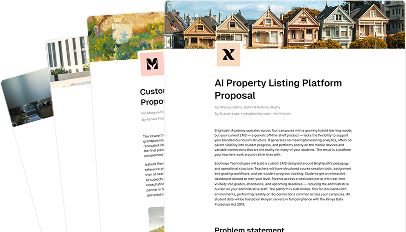
An RFP is a formal document a buyer sends to multiple vendors describing a problem, the requirements, and the evaluation criteria. Vendors respond with detailed proposals, and the buyer scores them against a rubric. The whole point is structure: instead of one buyer making a gut call, several stakeholders evaluate apples-to-apples submissions.
Direct hiring works fine for small, low-risk purchases. But once spend crosses a threshold, or once the decision affects multiple departments, most organizations switch to a competitive process. Here's why.
The Core Reasons Companies Choose RFPs
1. Risk reduction
Direct hires rely on relationships and reputation. An RFP forces vendors to document their approach, staffing, timelines, and past performance examples in writing. That paper trail protects the buyer if a project fails or a dispute lands in court. You can point to exactly what the vendor promised.
2. Compliance and governance
Public-sector buyers, regulated industries, and large enterprises often must run competitive bids by law or internal policy. Government agencies in the U.S. follow rules like the Federal Acquisition Regulation, which mandates open competition above certain dollar thresholds. Skipping the RFP can mean voided contracts, audit findings, or personal liability for the buyer.
3. Fair pricing through competition
When vendors know they're competing, they sharpen their pricing. A single-source negotiation gives the vendor leverage; a five-vendor RFP gives it to the buyer. Most procurement teams report meaningful savings just from making the competition visible.
4. Objective vendor comparison
RFPs use scoring rubrics so decisions don't hinge on who plays golf with the CEO. Evaluators rate each proposal on technical fit, price, experience, and approach. This is also why a weak executive summary that fails procurement scoring can sink an otherwise strong vendor — the rubric is the gatekeeper, not the relationship.
5. Stakeholder buy-in
Big purchases touch finance, IT, legal, and operations. An RFP gives every stakeholder a documented seat at the table. When the contract is signed, nobody can claim they were left out, which reduces internal friction during rollout.
RFP vs Direct Hire: A Quick Comparison
| Factor | Direct Hire | RFP Process |
|---|---|---|
| Speed | Fast | Slower (weeks to months) |
| Cost | Higher risk of overpaying | Competitive pricing |
| Documentation | Minimal | Extensive, auditable |
| Compliance | May violate policy | Meets governance rules |
| Best for | Small, low-risk buys | High-value, complex, regulated buys |
| Vendor accountability | Relationship-based | Contractually documented |
When Direct Hiring Makes More Sense
RFPs aren't free. They cost both sides time and money. Direct hiring beats an RFP when:
- The purchase is small and below the buyer's competitive-bid threshold.
- There's a single qualified vendor (sole-source justification).
- Speed matters more than savings — an emergency repair, for example.
- The buyer already has a proven vendor under a master agreement.
Many organizations use a tiered policy: purchases under $10,000 can be direct, $10,000–$100,000 need three quotes, and anything above requires a full RFP. The exact numbers vary, but the logic is consistent — bigger spend, more process.
The Hidden Cost of RFPs
Here's what most buyers underestimate: running an RFP is expensive on the vendor side too. Vendors pour hours into responses, and that cost gets baked into pricing eventually. For buyers, managing responses, scoring, and clarifications eats real staff time. That's why some companies debate whether to handle proposal work internally or externally — a calculation similar to the in-house proposal manager versus outsourcing cost comparison vendors run on their own side.
The trade-off is usually worth it. A well-run RFP that takes six weeks can save 15–30% on a multi-year contract while dramatically reducing the chance of a bad vendor fit.
How RFPs Protect Against Bad Vendor Decisions
Direct hires fail in predictable ways:
- Scope creep — no documented requirements means endless change orders.
- Capability gaps — the vendor oversells, then can't deliver.
- Price gouging — no competition means no pricing discipline.
- Audit exposure — no procurement record to defend the decision.
The RFP process attacks each of these. Requirements get written down. Capabilities get proven with references. Pricing gets competed. And the whole thing creates an audit trail.
Key Takeaways
- Companies issue RFPs to make vendor selection competitive, documented, and defensible rather than relationship-driven.
- The main drivers are risk reduction, compliance, fair pricing, objective comparison, and stakeholder alignment.
- Public-sector and regulated buyers often have no legal choice — competitive bidding is mandated.
- Direct hiring still wins for small, urgent, or sole-source purchases.
- The RFP process costs time and money, but it usually pays off on high-value, complex, or long-term contracts.
If you're a vendor responding to these documents, understanding why buyers run RFPs is the first step to writing proposals that score well. Buyers aren't looking for the cheapest pitch — they're looking for the lowest-risk, best-documented fit.