By 2027, generative AI will compress B2B go-to-market (GTM) cycles by automating research, personalization, and content production at scale. Expect smaller, AI-augmented revenue teams that target accounts with machine-built signals, run hyper-personalized outreach, and price on outcomes rather than headcount. The winners won't have the most AI — they'll have the cleanest data and tightest human-in-the-loop workflows.
What "GTM" Means and Why AI Hits It Hard
Go-to-market (GTM) is the combined motion a company uses to find, win, and expand customers — marketing, sales development, account executives, customer success, and the pricing model that wraps around them. Generative AI touches every step because most GTM work is language work: research, messaging, proposals, follow-ups, and reporting.
That's why GTM is one of the first business functions to get reorganized around AI. The tasks aren't physical. They're text, data, and judgment — exactly what large language models are good (and bad) at.

Five Shifts Reshaping B2B GTM by 2027
1. Research collapses from hours to seconds
Account and prospect research is the first thing to fully automate. Instead of a rep spending 20 minutes reading a 10-K, scanning LinkedIn, and checking news, an agent assembles a buyer brief — funding, hiring signals, tech stack, recent triggers — in seconds. The rep starts the conversation already informed.
This doesn't eliminate SDRs. It moves their value upstream: deciding which signals matter and when to act, not gathering them.
2. Outreach becomes personalized at machine scale
The old tradeoff was volume versus relevance. Generative AI breaks it. Teams can now produce thousands of genuinely tailored messages that reference a prospect's specific context. If you're evaluating tools, the differences between models matter — see ChatGPT vs Claude for cold outbound for how output quality varies by use case.
The risk is obvious: when everyone can generate "personalized" email, generic AI copy becomes noise. By 2027, the bar moves to message quality and timing, not just personalization tokens. Teams that learn to automate personalized cold email for B2B SaaS without sounding robotic will pull ahead.
3. Smaller teams, higher revenue per head
The biggest structural change is org shape. A 2027 GTM team looks leaner: fewer junior reps doing manual prospecting, more senior closers and a layer of "GTM engineers" who build and maintain AI workflows.
This mirrors what happened in software development with infrastructure-as-code — fewer people managing far more output. Revenue per employee becomes the metric that matters. McKinsey's research on generative AI's economic potential estimates sales and marketing as one of the highest-value functions for AI impact, with trillions in potential productivity gains.
4. Pricing moves from inputs to outcomes
When AI does the work, billing for hours stops making sense. Agencies and B2B services feel this first. If a model drafts the proposal in 30 seconds, you can't charge for the four hours it used to take. This pressure is already pushing new pricing models that replace the billable hour toward value- and outcome-based structures.
Expect more usage-based, performance-based, and retainer-plus-outcome hybrids by 2027. The agencies watching their billable hours percentage drop are seeing the early edge of this shift, not a temporary dip.
5. The proposal and RFP layer gets automated
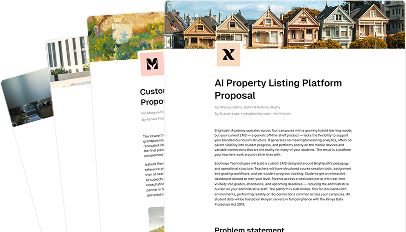
Responding to RFPs and writing proposals is high-effort, repetitive language work — a prime AI target. By 2027, AI handles first drafts of proposals, security questionnaires, and RFP responses by pulling from a content library, while humans review for accuracy and strategy. This is where deals are won or lost, so human-in-the-loop review stays mandatory.
A Comparison: GTM Roles Before and After AI
| GTM Function | 2024 reality | 2027 with generative AI |
|---|---|---|
| Prospecting | Manual list building, 20+ min/account | Agent-assembled briefs in seconds |
| Outreach | Templated, low personalization at scale | Tailored messaging at high volume |
| Proposals/RFPs | Hours of manual writing | AI first draft, human review |
| Pricing | Billable hours, seat-based | Outcome and usage-based |
| Team shape | Many junior reps | Fewer reps, GTM engineers added |
What This Means for Your Stack and Skills
The tooling decision splits into two layers: the prospecting data layer and the AI workflow layer. On data, teams are already optimizing budgets by comparing B2B prospecting platforms' free tier limits before committing to expensive contracts. Clean, enriched data is what makes AI outreach work — garbage in, garbage out applies brutally here.
On channels, AI will force a rethink of where you spend effort. If you've noticed LinkedIn InMail underperforming versus email, AI-driven testing makes it cheap to find the channel mix that actually converts for your segment.
Skills that gain value
Three skill sets get more valuable as AI handles the grunt work:
- Prompt and workflow design — building reliable, auditable AI pipelines that don't hallucinate into a customer's inbox.
- Judgment and strategy — deciding which accounts to pursue, what to say, and when to escalate to a human.
- Data hygiene — owning the CRM and enrichment data that every AI workflow depends on.

The Risks Most Teams Underestimate
Generative AI in GTM has failure modes that get expensive fast. Hallucinated facts in a proposal can sink a deal or create legal exposure. Mass AI outreach without quality control tanks sender reputation and domain deliverability. And over-automating customer-facing moments erodes trust — buyers can tell.
There's also a human cost. As workloads shift and teams restructure, leaders need to watch for burnout in creative and revenue teams before it triggers attrition. AI changes the work; it doesn't remove the people problem.
One more reality check: AI lowers the cost of trying things. Some teams will keep outsourcing B2B business development, but they'll expect those partners to be AI-augmented too, charging for outcomes rather than activity.
Key Takeaways
By 2027, generative AI won't replace B2B GTM — it'll restructure it. Research and outreach get automated, teams get smaller and more senior, and pricing shifts from hours to outcomes. The competitive edge moves to whoever has the cleanest data, the tightest human-in-the-loop workflows, and the discipline to keep quality high while volume scales. Start by fixing your data layer and building reviewable AI workflows now — the orgs that wait will be playing catch-up against teams already operating at a different revenue-per-head.