The AI sales tools that deliver the highest ROI for mid-market GTM teams fall into four buckets: conversation intelligence (Gong, Clari Copilot), sales engagement with AI sequencing (Outreach, Salesloft), AI-driven RFP and proposal automation (Wonit, Responsive), and forecasting plus deal-risk scoring (Clari). Tools that automate repetitive writing or surface deal risk pay back fastest, often within one or two quarters.
What "highest ROI" actually means for mid-market
Mid-market teams (roughly 100–1,000 employees) don't have the headcount to throw at problems the way enterprise does, but they have more deal complexity than startups. So ROI here isn't about flashy features. It's about reclaiming rep hours, shortening cycles, and lifting win rates without adding seats.
Most teams get this wrong by buying tools that promise AI magic but require months of data hygiene before they work. The fastest payback comes from tools that produce value on day one — drafting an email, summarizing a call, or generating a proposal answer.
Three ROI levers matter most:
- Time reclaimed per rep per week — usually the biggest lever, since fully loaded rep cost is high.
- Win-rate lift — even a 2–3 point improvement moves revenue meaningfully at mid-market deal volumes.
- Cycle-time reduction — faster proposals and follow-ups compress the funnel.

Conversation intelligence: fastest insight ROI
Tools like Gong and Clari Copilot record, transcribe, and analyze sales calls. For mid-market teams, the ROI shows up in two places: ramp time for new reps and coaching at scale. A manager can review deal risk across 40 reps without sitting in every call.
The payback is real but indirect — you're buying better coaching and pipeline visibility, not direct revenue. Teams that already run structured discovery get the most value, since the AI has clean signal to analyze. If your reps wing every call, fix that first by tightening how you prepare for discovery calls before layering AI on top.
Sales engagement with AI: volume plus relevance
Sales engagement platforms add AI sequencing, send-time optimization, and email drafting. The ROI lever is straightforward — more touches that land, fewer hours writing them.
For mid-market specifically, the Outreach vs Salesloft decision usually comes down to existing CRM fit and how much SDR volume you run. Both deliver solid ROI when teams actually adopt the AI features instead of treating them as expensive autodialers.
| Tool category | Primary ROI lever | Typical payback |
|---|---|---|
| Conversation intelligence | Coaching + ramp time | 1–2 quarters |
| Sales engagement (AI) | Rep hours + reply rates | 1 quarter |
| RFP/proposal automation | Cycle time + win rate | 1 quarter or less |
| Forecasting / deal scoring | Pipeline accuracy | 2 quarters |
RFP and proposal automation: the underrated ROI winner
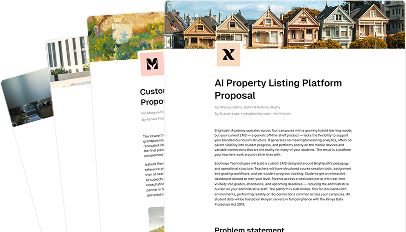
This is where mid-market teams leave the most money on the table. If your deals involve RFPs, security questionnaires, or long proposals, AI tools that draft answers from a knowledge base deliver some of the clearest ROI in the entire stack.
A single complex RFP can eat 20–40 hours across sales, SMEs, and proposal writers. Tools like Wonit and Responsive cut that by pulling approved answers automatically and drafting net-new responses with AI. The math is simple: respond to more RFPs with the same team, and respond faster than competitors.

Migration effort is the main objection here — teams worry about moving years of answer content. In practice, even a large RFP content migration is a one-time cost that pays back across every future deal. Don't let migration anxiety stall a tool with this much leverage.
Forecasting and deal scoring: ROI for the back half of the funnel
AI forecasting tools like Clari score deal health and flag at-risk pipeline. The ROI is slower to materialize because it depends on clean CRM data and consistent rep input. But for mid-market teams that miss forecast regularly, the cost of a blown quarter dwarfs the tool price.
The honest take: forecasting AI is a force multiplier on good process, not a fix for bad data. If your CRM hygiene is rough, the model just confidently predicts garbage.
How to sequence your AI tool investments
Don't buy everything at once. Sequence based on where your funnel actually leaks.
- Start with the bottleneck. If RFPs slow deals, automate proposals first. If reps ramp slowly, start with conversation intelligence.
- Prove ROI on one tool before adding the next. Track reclaimed hours and win rate for a full quarter.
- Check CRM dependency. Forecasting and engagement tools only work as well as your underlying CRM setup.
Most mid-market teams see the cleanest early wins from proposal and RFP automation, then layer in conversation intelligence once they want to improve top-of-funnel quality.
Key takeaways
- The highest-ROI AI sales tools for mid-market GTM are RFP/proposal automation, sales engagement with AI, conversation intelligence, and AI forecasting.
- RFP and proposal automation often pays back fastest because it eliminates 20–40 hours of work per complex deal.
- ROI depends on adoption and clean data — tools amplify good process, they don't replace it.
- Sequence purchases by funnel bottleneck, prove ROI on one tool, then expand.