B2B (business-to-business) sales is the process of selling products or services from one company to another, rather than to individual consumers. It differs from B2C (business-to-consumer) sales in deal size, sales cycle length, the number of decision-makers involved, and how buying decisions get made. B2B deals are larger, slower, and more relationship-driven.
What Is B2B Sales?
B2B sales means a business sells to another business. Think of a software vendor selling a CRM platform to a 500-person company, a manufacturer supplying components to a car maker, or a consulting firm landing an enterprise contract. The buyer isn't shopping for personal use — they're solving an organizational problem with a budget and stakeholders attached.
Because companies buy to improve operations, cut costs, or generate revenue, the conversation centers on ROI, integration, security, and long-term value. A single sale can be worth thousands to millions of dollars, which is why the process tends to be deliberate and well-documented.
Common B2B sales models
- SaaS subscriptions — recurring software licenses sold per seat or usage tier
- Enterprise / field sales — high-touch deals with named accounts and account executives
- Wholesale / distribution — bulk goods sold to resellers or retailers
- Professional services — consulting, agency, or managed-service contracts, often won through RFPs
If you're starting out, understanding how business development works in a SaaS startup gives useful context for how early B2B pipelines get built.
What Is B2C Sales?
B2C (business-to-consumer) sales is selling directly to individuals for personal use — a retail store, an e-commerce checkout, a streaming subscription. The buyer is usually the decision-maker and the user. Purchases happen fast, often emotionally, and the average order value is far lower than in B2B.
Most B2C transactions are self-service. A shopper finds a product, compares a few options, and buys within minutes or days. Marketing leans on brand, price, and impulse rather than long evaluation cycles.
B2B vs B2C: The Core Differences
The table below breaks down where the two models diverge.
| Factor | B2B Sales | B2C Sales |
|---|---|---|
| Buyer | Multiple stakeholders (a buying committee) | A single individual |
| Deal size | Large — thousands to millions | Small — often under a few hundred dollars |
| Sales cycle | Weeks to many months | Minutes to a few days |
| Decision driver | ROI, logic, risk reduction | Emotion, convenience, brand |
| Relationship | Long-term, account-managed | Mostly transactional |
1. The number of decision-makers
This is the biggest gap most people miss. According to Gartner research on B2B buying, a typical enterprise purchase now involves six to ten decision-makers. In B2C, it's usually one person — maybe two if it's a household purchase. That difference alone reshapes everything downstream.
2. Sales cycle length
B2B cycles run long because each stakeholder needs sign-off, procurement reviews contracts, and security teams vet vendors. A complex enterprise deal can take six to twelve months. B2C is built for speed — the goal is to remove friction from the path to purchase.
3. The buying motivation
B2C buyers chase how a product makes them feel or how convenient it is. B2B buyers want measurable outcomes: lower churn, faster onboarding, fewer support tickets. They'll demand proof — case studies, references, and ROI calculators.
How the B2B Sales Process Works
B2B selling follows a structured pipeline rather than a quick transaction. The typical flow looks like this:
- Prospecting — identify accounts that fit your ideal customer profile
- Qualification — confirm budget, authority, need, and timeline
- Discovery — uncover the buyer's pain points and goals
- Demo / proposal — present a tailored solution, often via a formal proposal or RFP response
- Negotiation — align on pricing, terms, and contract details
- Close & onboard — sign and begin delivery
For a deeper walkthrough, see the basic stages of a B2B sales pipeline. Each stage maps to a buyer's progression, and skipping steps usually stalls deals.
Where proposals and RFPs fit
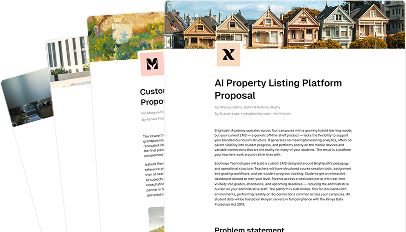
Many B2B deals — especially in enterprise, government, and professional services — require a formal request for proposal (RFP). The vendor submits a detailed document answering technical, security, and pricing questions. Winning these often comes down to response quality and speed, which is why teams increasingly automate parts of the workflow.
Why B2B Marketing Differs Too
Since B2B targets specific accounts rather than broad audiences, marketing strategy shifts accordingly. Tactics like account based marketing for B2B beginners focus resources on a defined list of high-value companies instead of casting a wide net. Content leans toward whitepapers, webinars, and case studies — material a buying committee can circulate internally.
B2C marketing, by contrast, optimizes for reach and conversion: paid social, influencer campaigns, email promotions, and a frictionless checkout.
Key Takeaways
- B2B sales means selling to businesses; B2C sales means selling to individual consumers.
- B2B deals are larger, slower, and involve a buying committee of multiple stakeholders.
- B2C purchases are fast, emotional, and made by a single buyer.
- B2B success depends on ROI, relationships, and a structured pipeline — often including proposals and RFPs.
- Most teams underestimate how many people sign off on a B2B deal; plan your process around the committee, not one champion.
Understanding these differences shapes how you build your team, structure your pipeline, and craft messaging. The fundamentals — qualify well, prove value, and remove friction — apply to both, but the execution looks very different.