For most small agencies and solo consultants, Bonsai is the better choice if you want speed, clean proposals, and built-in contracts plus payments out of the box. Dubsado wins when you need deep workflow automation, branded client portals, and customizable onboarding sequences. Pick Bonsai for simplicity, Dubsado for power.
Quick verdict: which fits your agency
Both tools handle proposals, contracts, invoicing, and onboarding, but they target slightly different buyers. Bonsai leans toward freelancers and lean agencies that bill hourly or on retainer and want everything pre-built. Dubsado attracts service businesses that run repeatable, multi-step client journeys and want to automate every touchpoint.
Here's the short version:
- Choose Bonsai if you want fast setup, polished proposal templates, time tracking, and tax tools in one place.
- Choose Dubsado if you need conditional workflows, custom forms, scheduling, and a client portal that matches your brand.

Proposals: speed vs customization
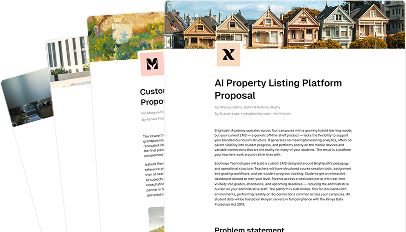
Bonsai's proposal builder is template-first. You drag in pricing tables, scope sections, and an e-signature block, then send. Clients can accept and the linked contract activates automatically. It's fast — you can ship a proposal in under 10 minutes. The tradeoff is less granular design control.
Dubsado treats proposals as part of a larger form system. You build branded proposals with custom CSS, embed packages clients can select, and trigger a workflow the moment they sign. That flexibility costs setup time. Expect a few hours to configure your first polished template.
If your agency sends high volumes of similar proposals, Bonsai's templating saves time. If every engagement is bespoke and brand presentation matters, Dubsado's customization pays off. Either way, the structure of your offer matters more than the tool — the same discipline that makes a sales discovery call productive applies to scoping a proposal.
Client onboarding workflows
This is where the two tools diverge most.
Dubsado automation
Dubsado's workflow engine is its headline feature. You chain actions with conditions: when a client signs, send a welcome email, attach an intake form, schedule a kickoff call, and apply a tag. You can branch logic based on package or form answers. For agencies onboarding clients through a fixed sequence, this removes manual follow-up almost entirely.
Bonsai automation
Bonsai automates the essentials — recurring invoices, payment reminders, contract activation on proposal acceptance — but it's linear rather than conditional. There's no deep branching. For straightforward onboarding (sign, pay, start), that's plenty. For complex multi-stage journeys, you'll hit limits.
Pricing comparison
Pricing shifts over time, so confirm current rates on each vendor's site. As of recent plans:
| Feature | Bonsai | Dubsado |
|---|---|---|
| Entry plan | ~$25/mo (annual) | ~$20/mo (annual) |
| Free trial | Limited trial | 3 clients free, no time limit |
| Conditional workflows | No | Yes |
| Time tracking | Built-in | Limited |
| Tax/accounting tools | Yes | No |
| Client portal | Basic | Branded, robust |
| E-signatures |
Dubsado's free tier (capped at three clients with no expiry) is genuinely useful for testing before you commit. Bonsai's value is breadth — accounting, tax estimates, and 1099 prep matter for U.S. freelancers and small agencies. You can verify current feature sets on the Dubsado and Bonsai sites.
Where each tool falls short
Most teams get this wrong: they pick on features instead of fit. Bonsai's weakness is automation depth — if your onboarding has more than a handful of conditional steps, you'll outgrow it. Dubsado's weakness is the learning curve. The workflow builder is powerful but unintuitive, and new users routinely spend a weekend configuring their first full client journey.
Neither tool is built for enterprise RFP responses or large proposal libraries. If you're scaling into formal procurement processes, you'll eventually look at dedicated proposal platforms — that's a different category from these client-management suites, closer to enterprise RFP response tooling.
Decision framework
- Map your onboarding steps. If it's three or fewer linear steps, Bonsai handles it. More, with branching? Dubsado.
- Count your monthly proposals. High volume and similar scope favors Bonsai templates.
- Check brand requirements. Need pixel-level control and a custom portal? Dubsado.
- Factor accounting needs. Want tax tools and expense tracking baked in? Bonsai.
- Test free. Run two real client onboardings in each before deciding.

The same evaluation rigor you'd apply when comparing sales engagement platforms works here — define your workflow first, then match the tool.
Key takeaways
- Bonsai = fast proposals, built-in payments, accounting, and tax tools. Best for solo consultants and lean agencies with simple onboarding.
- Dubsado = deep conditional workflows, branded portals, and customizable forms. Best for agencies with repeatable, multi-step client journeys.
- Test both with real clients using free trials before committing.
- Neither replaces dedicated proposal or RFP software once you scale into formal procurement.
- Pick based on workflow complexity and brand needs, not feature counts.