To find your first paying client without referrals, pick a narrow niche, build a small proof-of-work asset (a free audit, sample, or case study), then run targeted cold outreach to 30-50 prospects per week. Combine that with a discovery call that focuses on their problem, not your services. Specificity beats volume early on.
Most new agency owners get this backwards. They build a broad "we do everything" pitch and spray generic DMs at anyone with a pulse. That fails because you have no referrals, no social proof, and no reason for a stranger to trust you. The fix is to manufacture trust and relevance before you ask for money.
Pick a niche narrow enough to feel obvious
A referral-free start lives or dies on positioning. "I build websites" gets ignored. "I build booking pages for dental clinics that cut no-shows" gets a reply.
Narrow your niche by three filters:
- Industry you understand (past job, hobby, network you already touch)
- A specific, expensive problem that industry has
- A measurable outcome you can promise even with zero clients
When your message names the prospect's exact situation, it reads like it was written for them. That's what replaces a referral's built-in credibility.

Manufacture proof before you have clients
No referrals means no testimonials. So create proof on your own:
- Free audits — record a 5-minute Loom reviewing a prospect's website, ad account, or proposal process and point out two fixable issues.
- Spec work — redesign one page or rewrite one email sequence and send it unsolicited.
- Self-published case study — run your method on your own business or a friend's, then document the before/after.
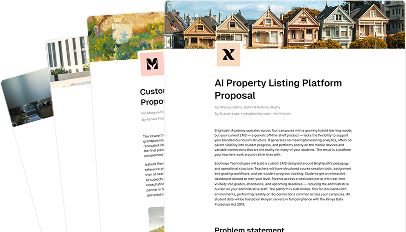
This gives you something concrete to attach to outreach. A prospect who watches a Loom of you fixing their problem is already half-sold.
Run targeted cold outreach
Cold outreach is the most reliable way to land client one. The math is simple: contact enough qualified prospects with a relevant offer and a few will say yes.
Build the list
Pull 50-100 companies that match your niche. Use LinkedIn Sales Navigator, Apollo, or even Google Maps for local services. Capture the decision-maker's name and a personalization hook.
Write the message
Keep cold emails under 90 words:
- Line 1: a specific observation about their business
- Line 2: the problem it causes
- Line 3: your relevant proof or offer (the audit)
- Line 4: a soft ask
Skip the volume game until you've validated a message that gets replies. If you're weighing whether to do this yourself or hire help, the tradeoffs between SDR outsourcing and doing it in-house matter a lot at this stage — early on, you should send the messages yourself to learn what lands.
Choose your channel
Email, LinkedIn DMs, and phone all work. For your first client, pick one channel and master it before adding another. This is the classic inbound vs outbound question, and for a brand-new agency outbound wins because you can't wait months for inbound to compound.
Show up where your niche already gathers
Outreach plus presence converts faster than outreach alone:
- Answer questions in niche subreddits, Slack groups, or industry forums
- Post one useful breakdown per week on LinkedIn tagged to your niche's pain
- Comment on prospects' posts for two weeks before you DM them
Warm prospects who've seen your name reply at far higher rates than true cold contacts.
Nail the first call
When someone replies, the goal of the call is diagnosis, not pitching. Ask about their current process, what they've tried, and what a fix is worth. Knowing how to prepare for a sales discovery call is the difference between a polite "we'll think about it" and a signed contract.
Close with a small, low-risk first engagement — a paid pilot or a single deliverable — rather than a 12-month retainer. Reduce the buyer's risk and your first yes comes faster.

Track everything in a simple CRM
You'll lose deals to disorganization if you run outreach from a spreadsheet for too long. A lightweight CRM keeps follow-ups on schedule, and the choice between HubSpot and Salesforce matters less than just having one. HubSpot's free tier is plenty for your first ten clients.
Set a rule: every reply gets a next step and a date. Most first clients close on the third or fourth touch, not the first.
A realistic 30-day plan
| Week | Focus | Target |
|---|---|---|
| 1 | Niche + offer + proof asset | 1 audit template, 1 case study |
| 2 | Build list + send first outreach | 50 prospects contacted |
| 3 | Follow up + content posting | 3-5 discovery calls booked |
| 4 | Pitch pilots, close | 1 paying client |
This isn't guaranteed in 30 days, but the cadence is what produces results. Volume of qualified conversations is the lever.
Key takeaways
- Replace referral trust with niche relevance and self-made proof.
- Run targeted cold outreach to 30-50 qualified prospects weekly.
- Lead with a free audit or spec work, not a generic pitch.
- Treat the first call as diagnosis, then offer a small paid pilot.
- Use a simple CRM and follow up four or more times — most first deals close there.
Your first client is a sales problem, not a marketing one. Specific outreach to the right people, backed by proof you create yourself, gets you paid before any referral ever could.