One of the most critical moments in any sales process is deciding whether to invest time and resources into pursuing a proposal opportunity. At Wonit, we call this the go/no-go phase, and we're convinced that basing these decisions on solid data doesn't just save time; it significantly boosts your win rates. Look, most sales teams already have established proposal workflows that have been refined over years of experience. We're not suggesting these processes are broken. What we are saying is that there's real potential to elevate them by anchoring your existing practices in a more systematic, data-driven framework.
In this article, we'll explore how leveraging data can transform your proposal process from reactive to strategic, and why it's essential for sales teams to make go/no-go decisions that are both informed and intentional.
What is data-driven proposal creation?
Engaging in a data-driven approach means using relevant data to make fact-based and proactive decisions. Many sales teams might feel that this is already a routine process, a rather self-evident and obvious method that is already incorporated into existing processes and workflows. After all, deciding whether or not to submit a proposal is typically not something that a sales team would consult a horoscope or truth sayer on. While this is true, and sales teams do review RFP documents and requirements, the question is:
How available and accessible is this data, and can this be improved?
Why yes of course it can!
By leveraging AI-powered proposal creation, Wonit ensures that relevant data is never far from hand or out of reach. Our AI-assisted content suggestions and smart content library search extract qualification requirements and applicable information from RFP documents and your knowledge base, presenting this in a clear and accessible manner. Facilitating quick and seamless access to proposal information thus enables a data-driven approach – but what are some of the key advantages?
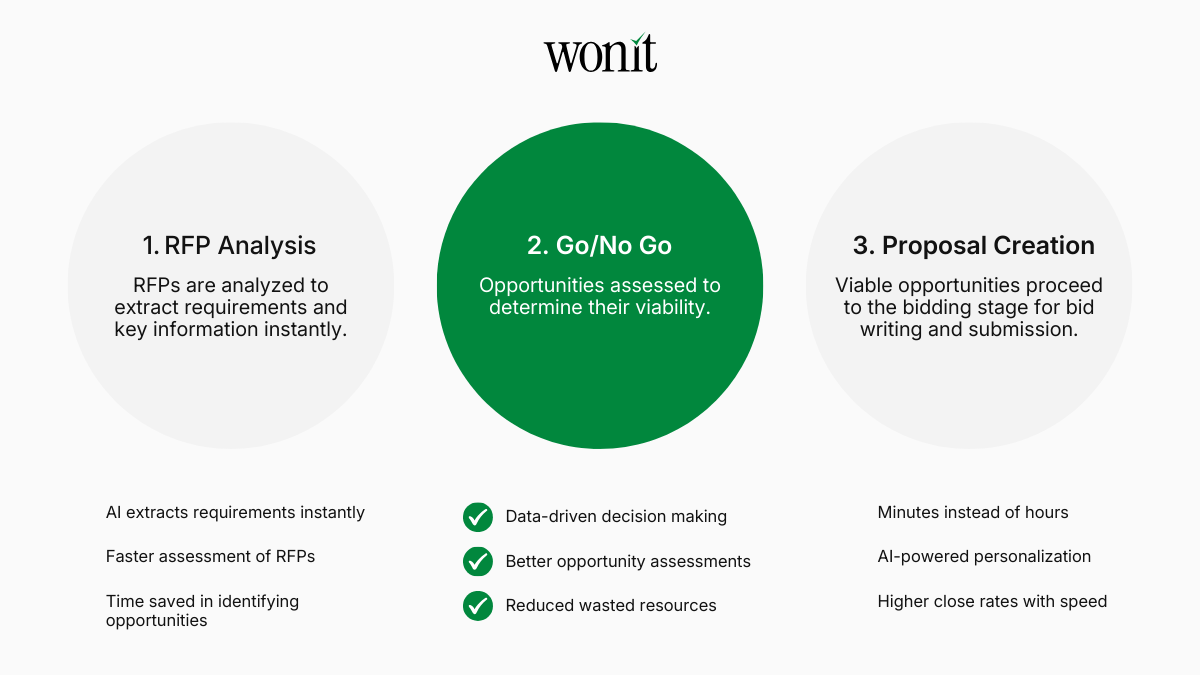
1. RFP analysis: Identifying relevant opportunities faster

One of the most crucial aspects when working with proposals is locating relevant information quickly. Traditional proposal processes usually require you to manually gather data from multiple sources – your CRM, past proposals, company documents, and RFP requirements. For sales teams handling multiple opportunities simultaneously, this process can quickly become overwhelming and time-consuming.
AI extracts requirements instantly
With our data-driven approach and AI-powered tools, Wonit confidently improves the accuracy and efficiency of opportunity assessment. Our RFP Auto-Responder analyzes complex RFPs instantly, extracting key requirements and information in seconds rather than hours. The AI processes RFP documents to identify crucial qualification requirements, budget constraints, timelines, and deliverables automatically.
Consider the following example: You and your sales team know that certain qualification requirements crucially determine whether or not a potential opportunity is viable. In each instance where you locate a potential opportunity, your team downloads and reviews related documents manually to confirm if the deal is worth pursuing.
But imagine if you could avoid the need to manually compile information from multiple sources. With Wonit, you can import data from your CRM (HubSpot, Salesforce, Pipedrive) and create a knowledge base by importing company documents and website links. You can simply ask: "Create a proposal for @hubspot:DealName" and the platform automatically fetches all important information and interactions, creating a highly personalized proposal that helps you quickly assess the opportunity's viability.
2. Go/no-go: Better data, better decisions
Having made an initial assessment, most sales teams would traditionally meet to discuss relevant opportunities, to arrive at a more definitive go/no-go decision. These meetings might include conversations on the scope, value, and requirements of one or more opportunities, and most often, someone has spent time compiling this presentation. Alternatively, meeting participants might be asked to review documents ahead of time, which could mean that multiple team members are required to review the same information – a rather inefficient and time-consuming process.
Improved decision making
However, with Wonit data-driven approach, decision-makers during these internal assessment meetings have a better and more solid understanding of the details relating to potential opportunities. The AI creates comprehensive proposals by pulling from your knowledge base and CRM data, providing a clear overview where any specific information is immediately accessible.
By engaging in a data-driven approach, the relevant information is readily available early on in the assessment process. Sales teams can easily identify blockers or requirements that would ultimately result in a no-go decision before investing significant time and resources. With an improved means of making definitive go/no-go decisions early on, you can reduce the number of unviable and irrelevant opportunities that might otherwise slip through unnoticed. This in turn both saves time and resources, improving your chances of winning relevant and viable opportunities.
3. Proposal creation: Minutes instead of hours

In traditional sales processes, there is a significant amount of time that risks being wasted if, at a later stage, an opportunity that is being worked on turns out to be a poor fit or is otherwise found to be unviable. Often, several people may have already spent considerable time reviewing and compiling information. It is therefore crucially important that sales teams can distinguish if opportunities are relevant or not in the quickest way possible.
AI-powered personalization
Once you've made a go decision, Wonit transforms the proposal creation process entirely. What traditionally takes hours or even days now takes just minutes. Our conversational AI allows you to create complete, professional proposals through simple natural language commands. No more wrestling with complex proposal software or spending hours on formatting and design. The AI doesn't just create generic templates – it generates fully personalized proposals by pulling relevant information from your knowledge base, CRM data, and past successful proposals. Each proposal is tailored to the specific prospect, their industry, pain points, and requirements mentioned in the RFP. Speed matters in sales. The faster you can respond to an RFP or opportunity, the better your chances of winning.
4. Building organizational knowledge and transparency
Using a data-driven approach when engaging in proposal processes improves efficiency, but it also has wider beneficial effects. It allows for a deeper understanding and analysis of your sales processes overall. Wonit advanced analytics show you exactly how prospects engage with your proposals. You can see who viewed what sections and for how long, providing insights into which proposals resonate most and which ones don't. This data helps you understand at what stages opportunities are typically rejected and why.
Is too much time being spent on unviable opportunities? These insights will help you streamline your overall go/no-go decision-making process and avoid similar mistakes in the future. Another benefit of having team collaboration features is that it's easier to work together effectively. Team members can share proposals, leave comments, and collaborate seamlessly on opportunities. This helps sales managers understand multiple opportunities being worked on simultaneously, especially when colleagues are absent or unavailable.