You've spent hours perfecting your proposal. The pricing is competitive, your pitch is solid, and you're confident this deal is yours. You export to PDF, attach it to an email, and hit send. Then you wait. And wait. Three days pass with no response. You follow up. "I'll get to it soon," they say. A week later, the deal goes cold.
This scenario plays out thousands of times every day. But here's what most people miss - it's not the proposal content that's failing. It's the format you're using to deliver it.
Problems with PDFs
PDFs have been the default for business documents since the 90s. But what worked in 1993 doesn't work in 2024. The way people consume content has fundamentally changed, yet we're still treating proposals like static documents that need to be downloaded and opened.
Mobile viewing is broken: Your prospects check emails on their phones constantly - during commutes, between meetings, while grabbing coffee. When they see a PDF attachment, they face an immediate decision: download now and struggle to read it on a small screen, or wait until they're at their desk. Most choose to wait. And waiting means forgetting. By the time they're back at their computer, three competitors have already sent something easier to access.
No visibility into engagement: Once you send a PDF, you're completely blind. Did they open it? Which sections interested them? Did they share it with decision-makers? You have no idea. You're left guessing when to follow up, how aggressive to be, and what points to emphasize in your next conversation.
Updates require starting over: Client needs a different pricing option? Spotted a typo after sending? Want to add a new case study? With PDFs, every change means creating a new document, re-exporting, and sending another email. Now your prospect has multiple versions, confusion about which is current, and a growing sense that you're disorganized.
Questions create delays: Your prospect is reviewing your proposal at 9 PM and has a simple question about implementation timelines. You're offline. They can't move forward, so they set it aside. By morning, momentum is lost. They've moved on to other priorities, and your proposal slides down their mental priority list.
The advantages of wonit web-based proposals

Web-based proposals solve every problem that PDFs create. Instead of an attachment, you send a link. Your prospect clicks it, and the proposal opens instantly in their browser. No downloads, no apps, no friction. But that's just the beginning.
1. Perfect on every device
The proposal automatically adapts to whatever screen your prospect is using. On a phone, the layout adjusts for easy reading. On a tablet, it optimizes for the larger display. On a desktop, it expands to fill the screen. Your prospect gets the same professional experience regardless of how they access it.
2. Real-time engagement insights
With Wonit, you get notifications the moment someone opens your proposal. You see exactly which sections they read, how long they spent on each part, and when they return to review it again. Block-by-block analytics show you what resonates and what gets skipped. You know who's genuinely interested before you even pick up the phone.
3. Update instantly without resending
Need to change something? Log into your dashboard, make the edit, and it's live immediately. No new version to send. No confusion about which document is current. Your prospect always sees the latest information, and you maintain complete control over your content.
4. 24/7 AI support
Wonit includes an AI chat widget embedded right in your proposal. When prospects have questions at any time - even at midnight - they get instant answers. The AI understands your business, your offerings, and the specific proposal. It keeps conversations moving forward even when you're unavailable.
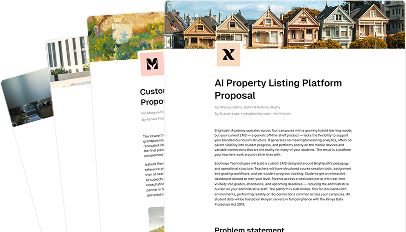
Create proposals faster
Traditional proposal software forces you to make dozens of design decisions. Choose a template. Adjust fonts. Align images. Format pricing tables. Configure page breaks. By the time you finish, hours have passed and your prospect's enthusiasm has cooled.
Wonit eliminates this entire process. Simply describe what you need: "Create a marketing proposal for a SaaS company, $50K budget, 3-month timeline" and the AI generates a complete, professionally designed proposal in minutes. You focus on winning the deal, not wrestling with software.
For repeat clients or CRM-tracked leads, it's even faster. Type "Create a proposal for this HubSpot deal" and Wonit pulls all relevant information - company details, previous interactions, specific needs - and generates a personalized proposal automatically.
Simple signatures

Getting a signature on a PDF requires your prospect to download the file, print it, sign it physically, scan it, and email it back. Or they need a digital certificate, which most people don't have and don't know how to get. Either way, you're adding unnecessary steps at the exact moment when you need momentum.
Web-based proposals include built-in e-signatures. Your prospect types their name, clicks confirm, and the deal is closed. It takes five seconds. It's legally binding. And it happens while they're still excited about working with you.
Better client experience
Your prospects won't remember every detail of your proposal. But they will remember how it made them feel. Did it make their decision easier or harder? Did it respect their time or waste it? Did it feel modern and professional or outdated and clunky?
Web-based proposals create the first impression. They demonstrate that you understand modern business. They show you value your prospect's time. They signal that working with you will be smooth and efficient, not frustrating and complicated.
Conclusion
PDFs aren't just outdated - they're actively hurting your close rates. Every friction point, every delay, every unanswered question gives your prospect a reason to hesitate or look elsewhere. Web-based proposals remove these barriers and create momentum toward yes. Your competitors are already making this shift. They're closing deals faster, getting better engagement, and creating superior client experiences. The question isn't whether to move away from PDFs. It's whether you'll do it before your prospects start wondering why you're still doing things the old way.