Want to improve your sales process? You'll need a few key sales documents. While your audience has more choices than ever, standing out is simple if you know the right approach. Your sales process should match what the market and your customers expect today.
Modern buyers want to feel special and expect you to put in extra effort to win their business. That's why you need the right sales documents based on your industry and how your business works.
What is a sales document?

Sales documents are resources that guide your sales process. They help you connect with potential customers at different stages to close more deals. These documents show your products and services to interested buyers. Since every company uses your solution differently, make sure each document feels personal to the reader.
The importance of sales documents
These documents matter because they show your products and services to interested buyers. Since every company uses your solution differently, you need to personalize each document for your reader. Creating good sales documents needs teamwork. Your marketing and sales teams should work together on these materials.
Don't forget about mobile. Your sales documents must look great on phones, tablets, and computers to give the best customer experience. Whether you use templates or create from scratch, keep your brand consistent. Every document should have your logo, brand colors, and fonts to look professional.
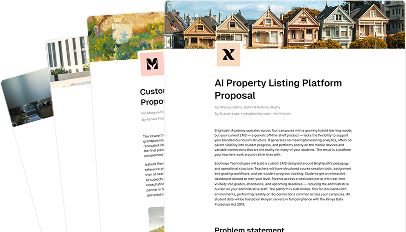
Types of sales documents
Your industry affects which sales documents you need, but five documents work for most sales teams: business proposals, case studies, sales decks, invoices, and contracts. These basic documents are essential for closing deals, and every sales professional should know how to create them.
Let's look at each document and why they matter in your sales process.
1. Business proposals
A business proposal is often your first official contact with potential clients. It's your chance to make a great first impression. Winning deals needs both a strong offer and a good proposal. Every proposal must be well-written, well-researched, and look professional. These documents have one purpose: to convince clients to choose you.
Start with a good discovery session before writing your proposal. This conversation shows you important information that shapes your offer. Learn about their budget, understand why they're considering your company, and find out what specific sections they want. Your proposal needs to show why you're the best partner. Listen carefully to your prospects and use their words when describing their problems. Show you understand before talking about your experience and what makes you different.
How to structure your proposals
A good proposal structure includes:
Your approach and methods
Timeline and milestones
Client testimonials and proof
Investment and pricing
Your guarantee
Clear next steps
Wonit lets you build professional proposals in minutes through conversational AI. Just describe your project naturally, and the AI creates a complete proposal with pricing tables, timelines, and professional design. Connect your CRM like HubSpot, and AI can create personalized proposals for specific leads instantly.
Helpful proposal features
Your clients will like having an AI chatbot when viewing proposals. This widget appears on your web-based proposal and talks with visitors, answering questions instantly. Since it's connected to your proposal content and knowledge base, clients get quick, accurate answers about your company. Wonit proposals include built-in signature features to close deals faster. Clients can digitally sign without printing or scanning documents. Add Stripe payment links so clients can pay right after signing. This makes your sales cycle faster and gets you paid quicker.
2. Case studies
Case studies prove your skills better than any sales pitch. They show real results and let potential clients hear about your work from someone else. About 13% of marketers use case studies as a main part of their content strategy. While they take more time than blog posts, their impact makes them worth it. Case studies build trust. Beyond numbers and charts, they create emotional connections by showing how you've truly helped businesses grow.
How to write a case study
Start by clarifying your goal. Are you trying to get more leads or enter a new market? Define how this case study will improve your sales approach. Next, plan your format. Storytelling works best, show how you helped a client increase revenue and what happened after.
Charts and graphs show growth well, but context matters more. Show quick ROI, then explain how this gave your client more time for other priorities and skill development. Include the human side in your story. Prospects want to understand the real business impact, not just see numbers.
3. Contracts
Contracts feel scary because you need to cover many details and possible situations to protect your revenue. Most contracts follow a fixed-price model, but unexpected costs can happen. Always include language about these situations.
Other common contract types include:

4. Sales decks
Sales decks are presentations that show your offerings to prospects. They support your verbal pitch and should focus on the problem you're solving. Start by showing the current situation, then show how your solution makes things better. Visually explain how you'll help them overcome their challenges. Success comes from choosing the right information and keeping content easy to understand. Use more visuals than long text blocks.
One sales deck won't work forever. Review and update regularly to keep data accurate and materials easy to access. Keep your audience interested with short, compelling decks that offer fresh insights. Rather than focusing on products, tell a story about improving their daily work and results.
5. Invoices
Invoices are the final sales document you'll send clients. They show product or service costs and work as official payment records. They serve several purposes including tracking payments, legal protection, record keeping, tax compliance, and business monitoring.
Every invoice should contain:
Your company logo
Unique invoice number
Issue date
Seller and buyer information
Per-unit pricing
Total amount due
Tax details and rates
Additional terms and conditions
Conclusion
A good sales strategy depends on creating strong sales documents that help you close more business. When sharing these documents, use a professional email address like yourname@yourbrand.com instead of generic ones. However, creating documents shouldn't slow down your sales process. Wonit helps you create professional proposals and sales documents in minutes using conversational AI. The platform handles design, layout, and formatting automatically, so you can focus on winning deals instead of fighting with software. Give your sales team tools that help them create sales materials your customers actually want to read.