Most sales teams chase deals based on gut feeling, send proposals into the void, and wonder why their close rates stay stuck. Meanwhile, top performers use data to guide their decisions. The difference between a 15% close rate and a 35% close rate isn't talent or luck. It's knowing which actions actually work and which ones just waste time. Let's talk about what the numbers reveal and how you can use them to start closing more deals.
Why sales statistics matter?

Your intuition about what works in sales is probably wrong. Not because you're bad at sales, but because human memory is terrible at spotting patterns. We remember big wins and forget quiet losses. We credit success to the wrong things and miss what actually matters. Statistics show you what actually leads to closed deals. According to the 2023 Demand Gen Report, personalized, data-backed content helps B2B teams speed up the buying process.
Here's what buyers are saying:
54% of buyers are overwhelmed by too much content, but most of it lacks quality.
63% of customers say statistics and case studies are the most convincing content during buying.
74% of buyers are more likely to trust a sales professional who shares relevant data.
When you present well-researched information in your sales conversations, you build trust with prospects. In a world where buyers see too much information and providing clear and relevant data helps you stand out.
Five strategies to boost your rates
The statistics are clear, but knowing numbers isn't enough. You need actionable strategies that turn data into closed deals. Here are five proven approaches that high-performing sales teams use to consistently beat average close rates.
1. Measure your baseline

You can't improve what you don't measure. Most sales teams work on feelings rather than actual close rate data. The calculation is simple: deals won divided by total opportunities. Here's your reality check. The average close rate across industries is around 20%. In B2B, it's about 21%. A 2024 Hubspot report shows software companies average 22%, finance is around 19%, and business sectors can reach 27%. This means roughly 80% of your prospects will say no or just disappear.
Understanding these numbers gives you context. Hitting 30% means you're doing better than most. Sitting at 10% means something in your process is broken. But measuring your overall close rate isn't enough. You need to track where deals actually break down. Suppose your close rate is 18%. Without detailed data, you might blame pricing. But if you look closer, you might find most deals die after the second meeting, before pricing even comes up. According to HubSpot research, top-performing sales teams are 1.5× more likely to base forecasts on data instead of guessing. Companies using sales analytics improve their results by 12-15%.
2. Respond fast and follow up consistently
Two of the biggest factors in closing deals are how fast you respond and how persistently you follow up. On average, B2B sales teams take 42 hours to respond to new leads, and 38% of those leads never respond back. But businesses that respond within 5 minutes are 100× more likely to connect and convert. Five minutes versus 42 hours is the difference between starting a conversation and losing an opportunity. When a lead downloads your content at 9:15 a.m. and you send them a personalized note by 9:45, you're reaching them while their interest is fresh.
The data is clear: 80% of successful sales need five or more follow-ups. Yet 44% of reps give up after just one try, according to HubSpot research. Nearly half of salespeople walk away from deals just as their chances of closing start to improve. Follow-ups need to add value. Nobody wants seven messages saying "just checking in." Each message should offer something useful like a case study, an updated proposal, or helpful information.
3. Personalize your proposals quickly

Think about your own life. You expect Amazon to recommend products based on what you browse. Your buyers expect the same from your sales process. A proposal full of placeholders and generic text shows you didn't bother to learn about them. Personalization directly affects close rates.
Here are the numbers: 80% of consumers are more likely to buy from a brand that provides personalized experiences, companies that invest in personalization often exceed their targets with 68% reporting this, using behavioral data in personalization can increase conversion rates by up to 20%, and 75% of marketers say personalization increases engagement.
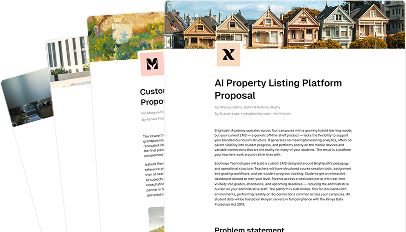
The good news: personalization doesn't mean writing everything from scratch for every prospect. It means adding relevant examples, mentioning their specific challenges, and adjusting key sections to their industry. With Wonit AI-powered proposal builders, you can create personalized proposals in minutes instead of hours. Import data directly from your CRM like HubSpot, and let AI generate a fully tailored proposal for that specific lead. The result is something that feels custom-made without requiring you to start from scratch every time.
4. Focus on quality
Chasing every lead wastes time on prospects who were never going to buy. High-performing teams qualify carefully. They understand that closing probability depends on fit like industry match, budget, decision-making authority, and timing. The stats support focusing on quality: 61% of marketers say generating high-quality leads is their biggest challenge, and sales teams that qualify well see up to 30% higher win rates, according to industry data.
Five deep, qualified conversations are worth more than 50 surface-level ones. A long, jargon-heavy document shows you don't understand what the buyer cares about. A clean, focused proposal shows respect for their time. Your proposal should answer three questions clearly:
What problem are you solving?
How will you solve it?
What will it cost?
5. Test and collaborate constantly
71% of high-growth companies test different versions of sales messages every month. A/B testing sales emails alone can increase response rates by up to 49%. Try two versions of a proposal, one with pricing at the start, one with pricing later. Try different follow-up timing. Small tests add up to big improvements over time. Wonit makes testing simple: create proposals from scratch in minutes using conversational AI, test different layouts with drag-and-drop blocks, and update content instantly.
The best proposals come from team input. But collaboration can slow you down if you're emailing files back and forth. Wonit includes team collaboration features, share proposals with team members and get comment threads for faster feedback, keeping your messaging consistent across your organization.
Conclusion
Sales statistics show you where most teams fail and where small changes create big results. But knowing the stats doesn't close deals, using them does. The difference between a 20% close rate and a 40% close rate is doing five things well: measuring what matters, responding fast and following up persistently, personalizing at scale, focusing on quality, and testing constantly. The human parts of sales still matter most, but the right tools make those qualities more effective.